Ask in plain words
A shopper types what they need. One small AI call reads it as the store’s own filters: colors, flower types, occasion, budget, effort level, season, product type and what to leave out.
FiftyFlowers · Storefront

A storefront chat panel: shoppers describe what they need and get matching catalog products with prices. The AI only reads the request; code runs the search.
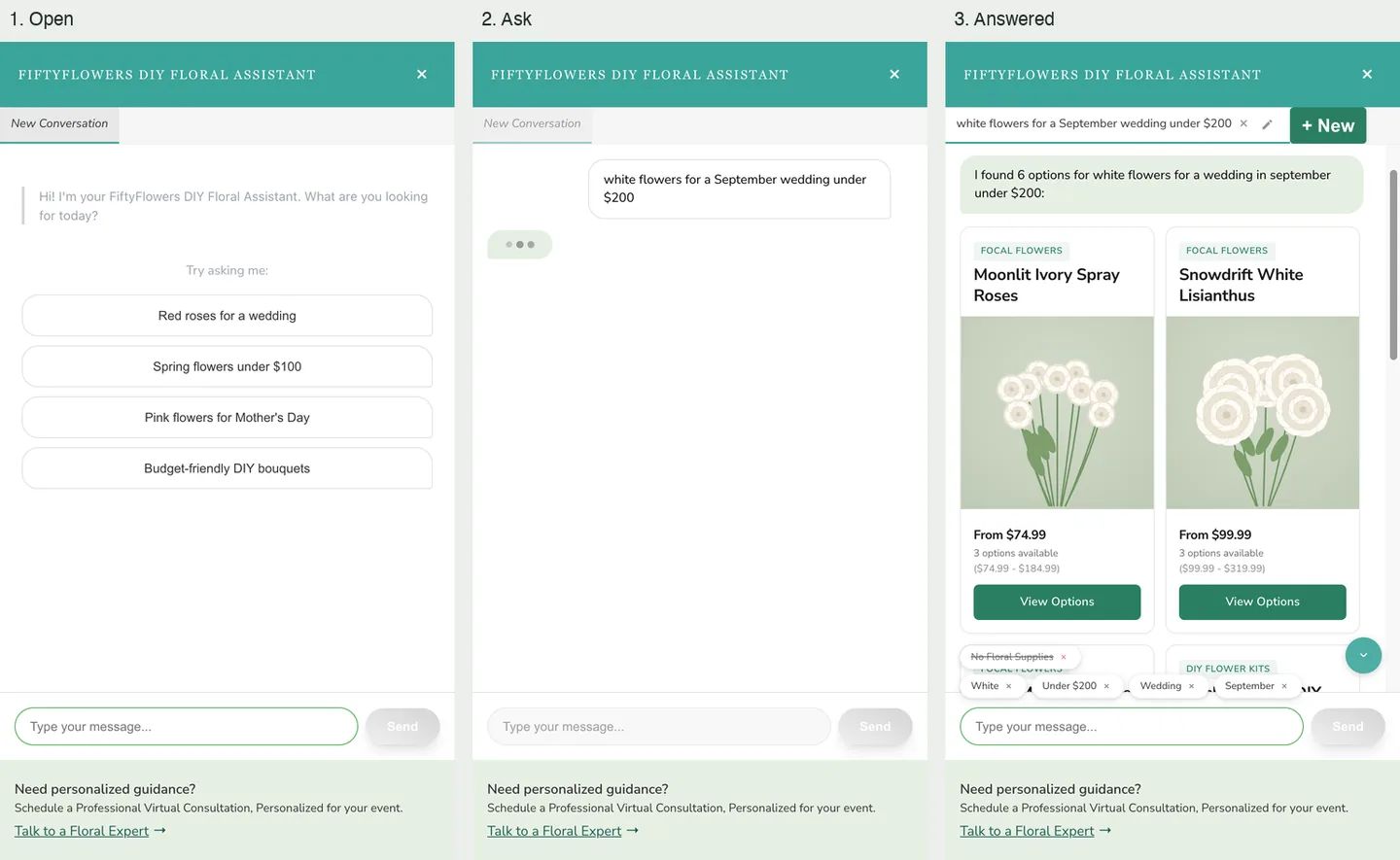
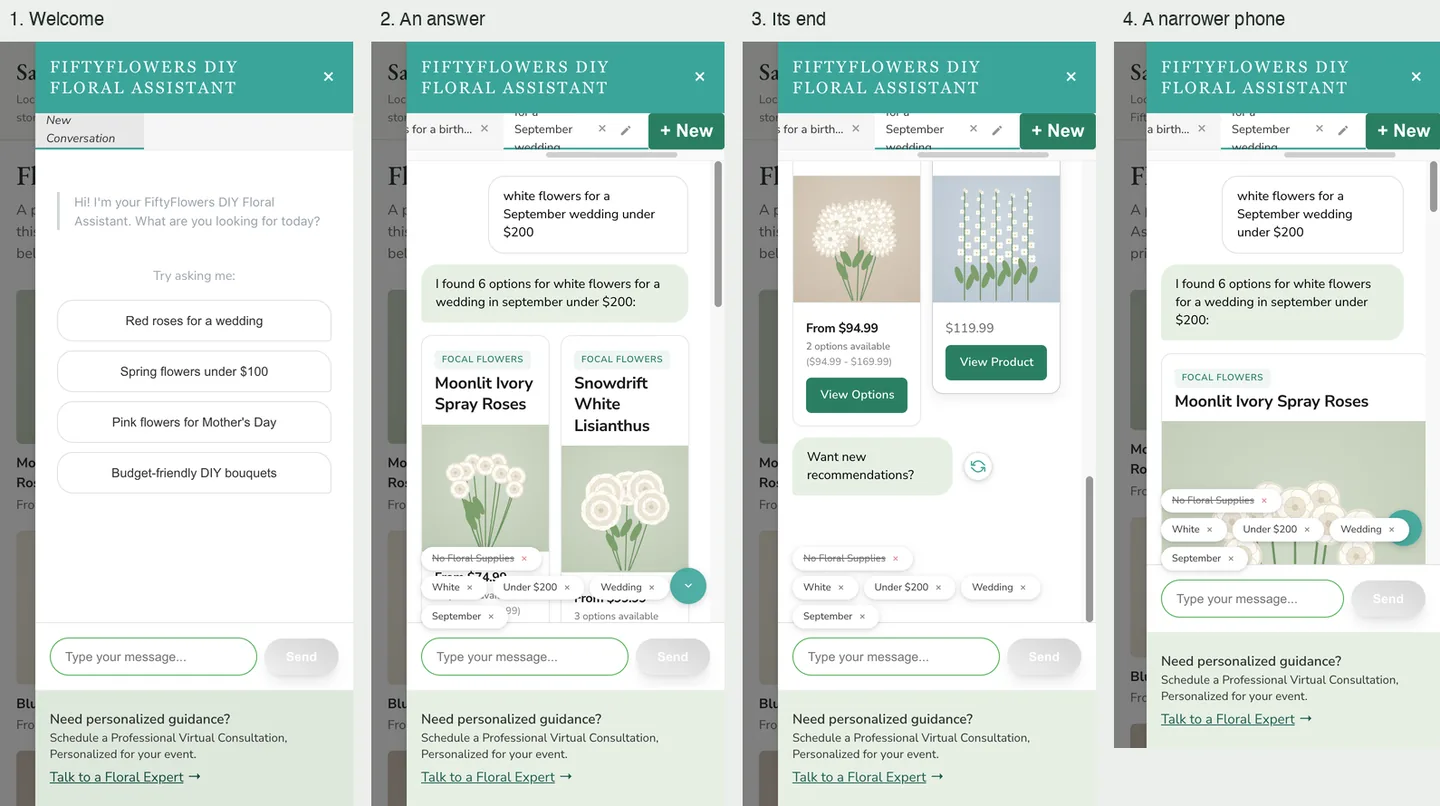
The assistant’s panel: open, ask, answered. Local run of the store theme’s code with an invented catalog; the reading of the request was typed in by hand, and the search, the reply and the chips are the real code.
The context
Shoppers know the event, the colors and the budget, not the product names. The goal was a way to describe a need in plain words and get catalog products back, with no chance of an invented product or price.
My contribution
Built the 2025 prototype, then the storefront assistant: the chat panel in the store theme, the conversation and catalog-search functions on AWS, and the prompt that turns a shopper’s words into the store’s own filters.
The product
Every state of the panel follows as side-by-side views, then the 2025 prototype.
A shopper types what they need. One small AI call reads it as the store’s own filters: colors, flower types, occasion, budget, effort level, season, product type and what to leave out.
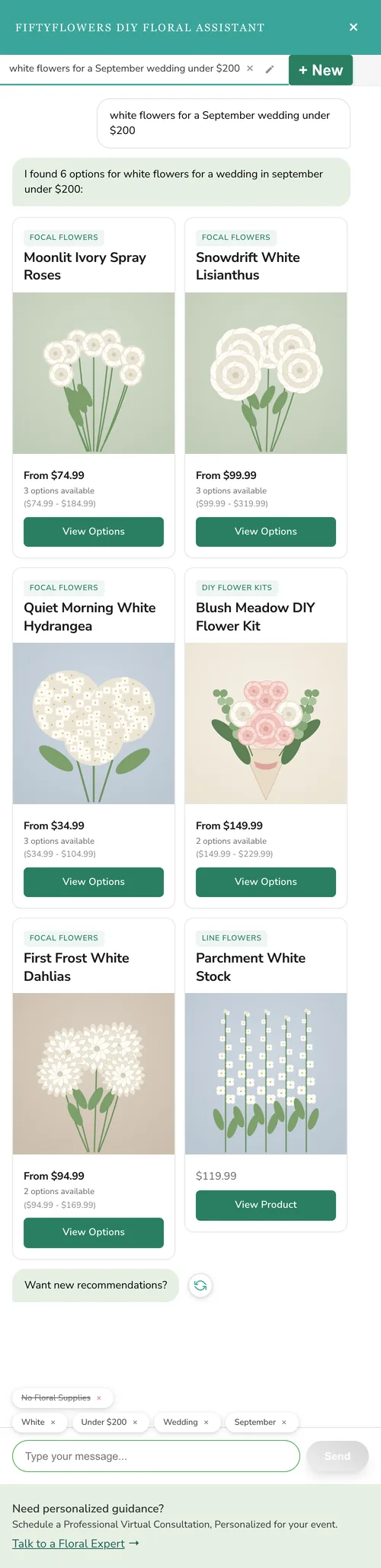
Code searches the catalog with those filters and returns up to six products with catalog prices. The AI never sees products or writes the reply, so it cannot invent either.
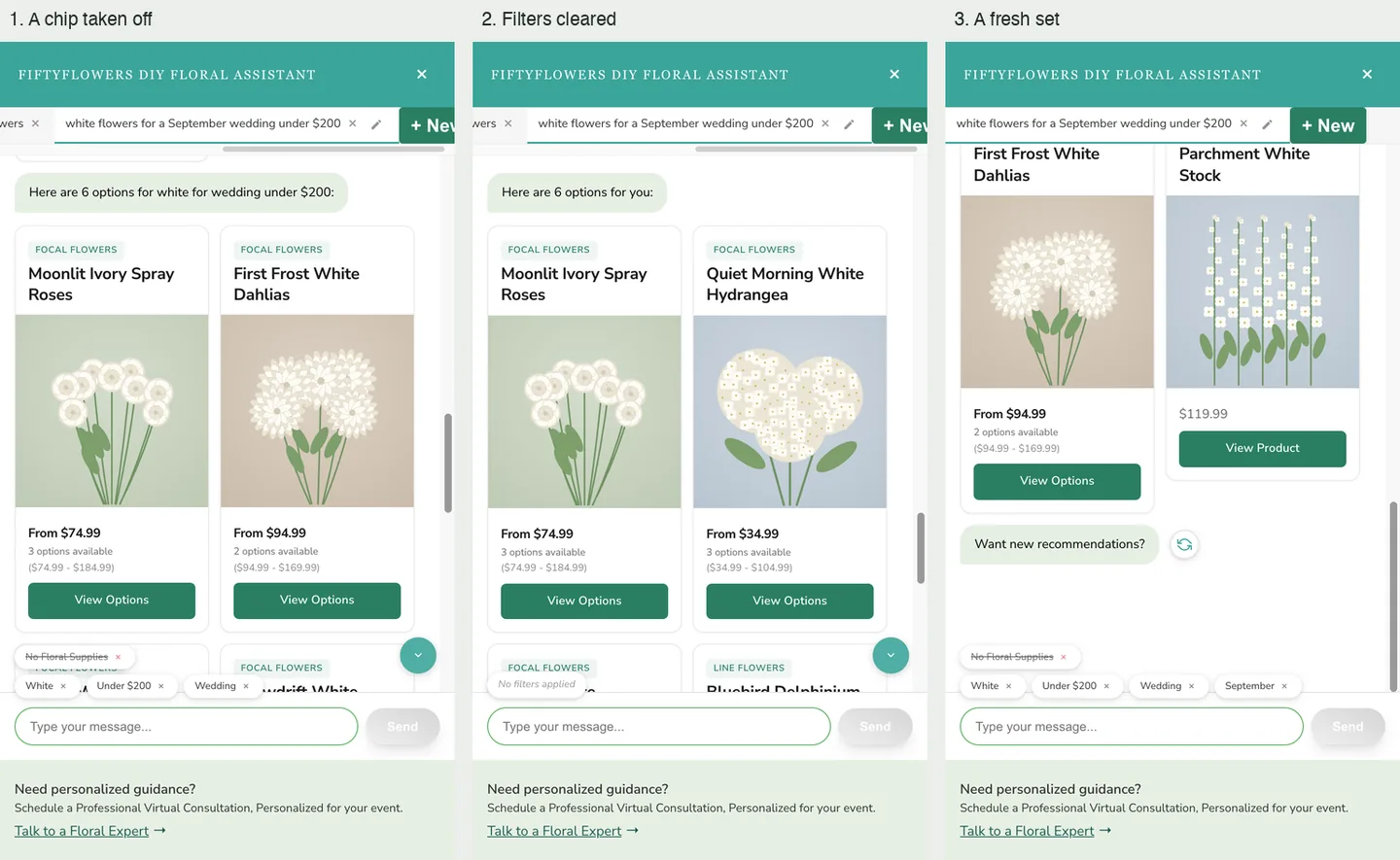
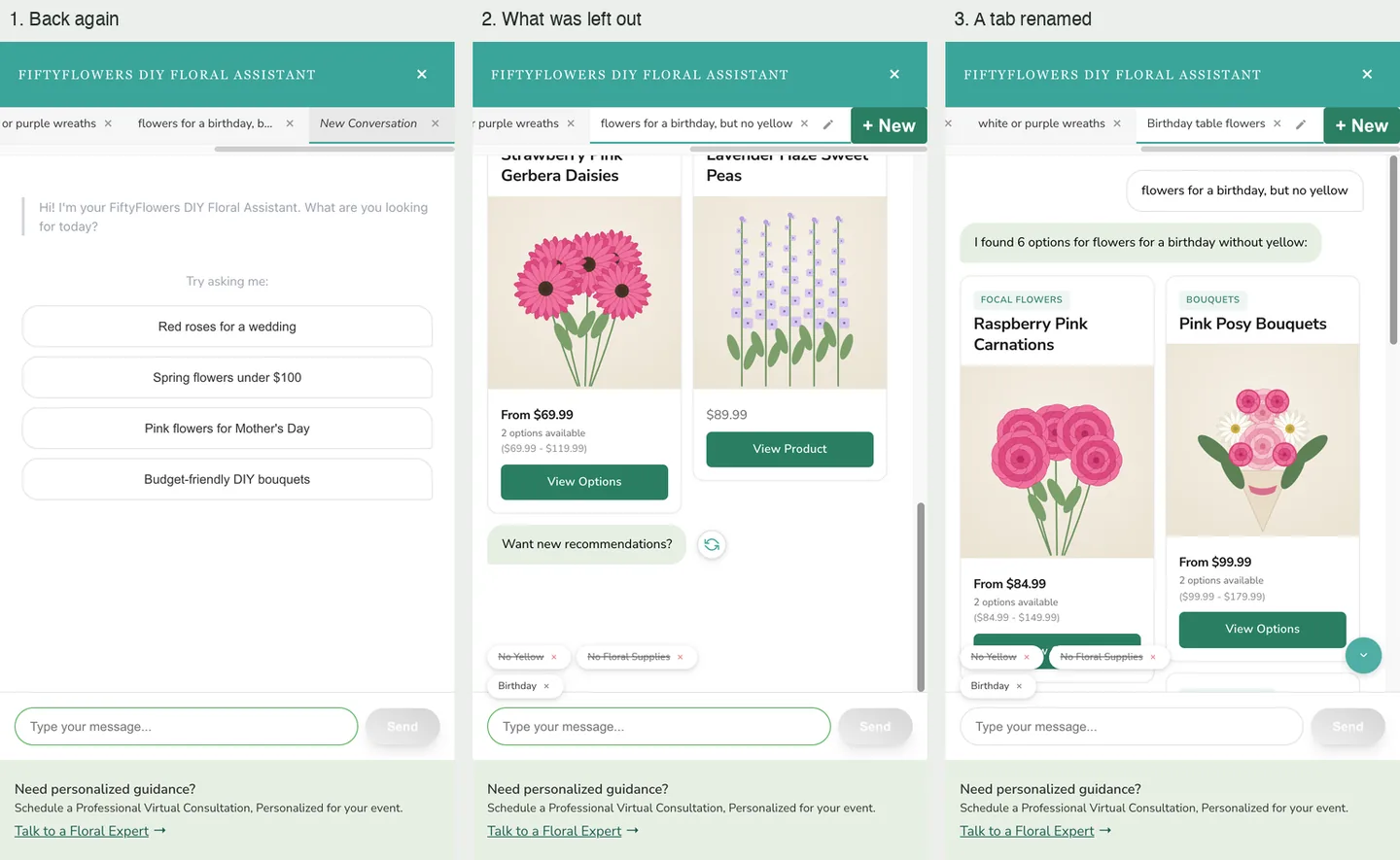
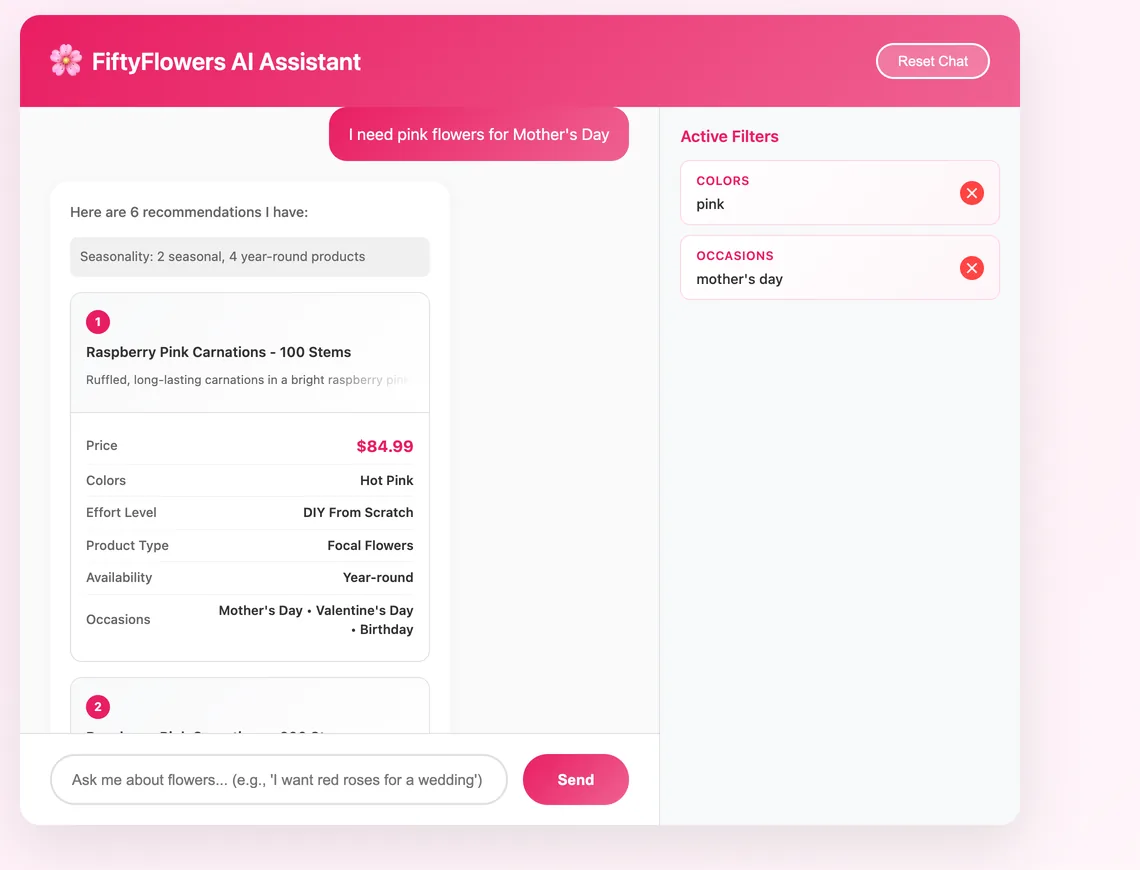
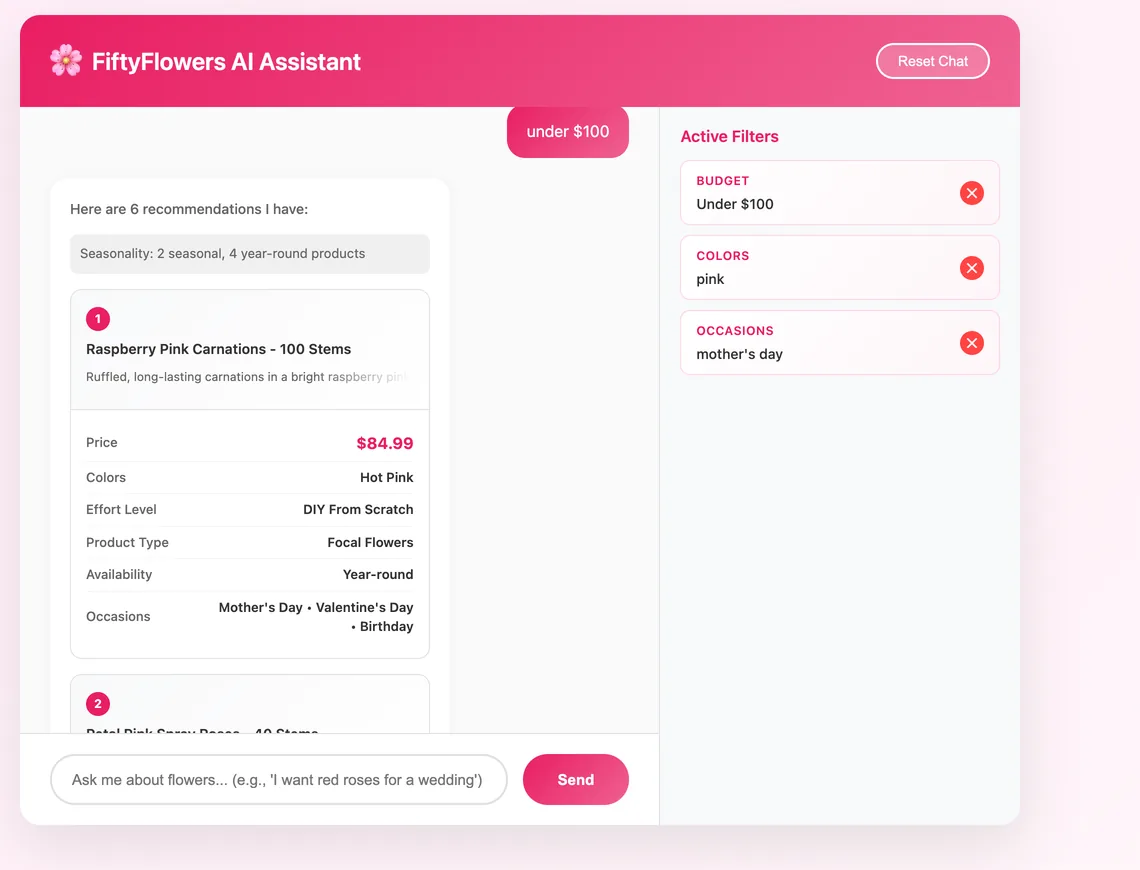
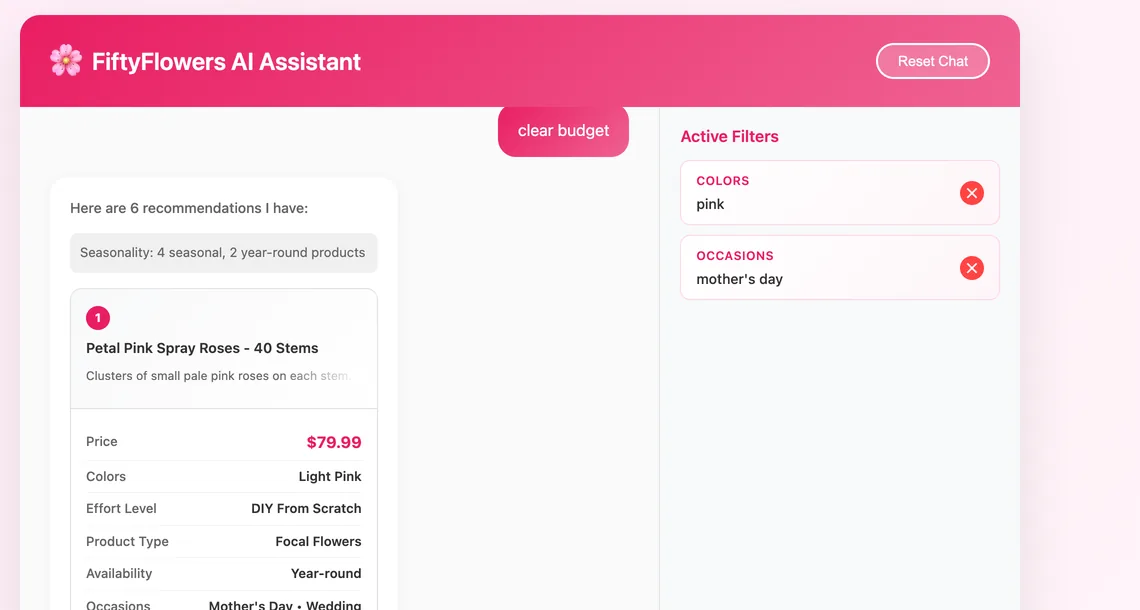
The request appears as removable chips. Removing one, clearing them all or asking for new recommendations re-runs the search with no AI call.
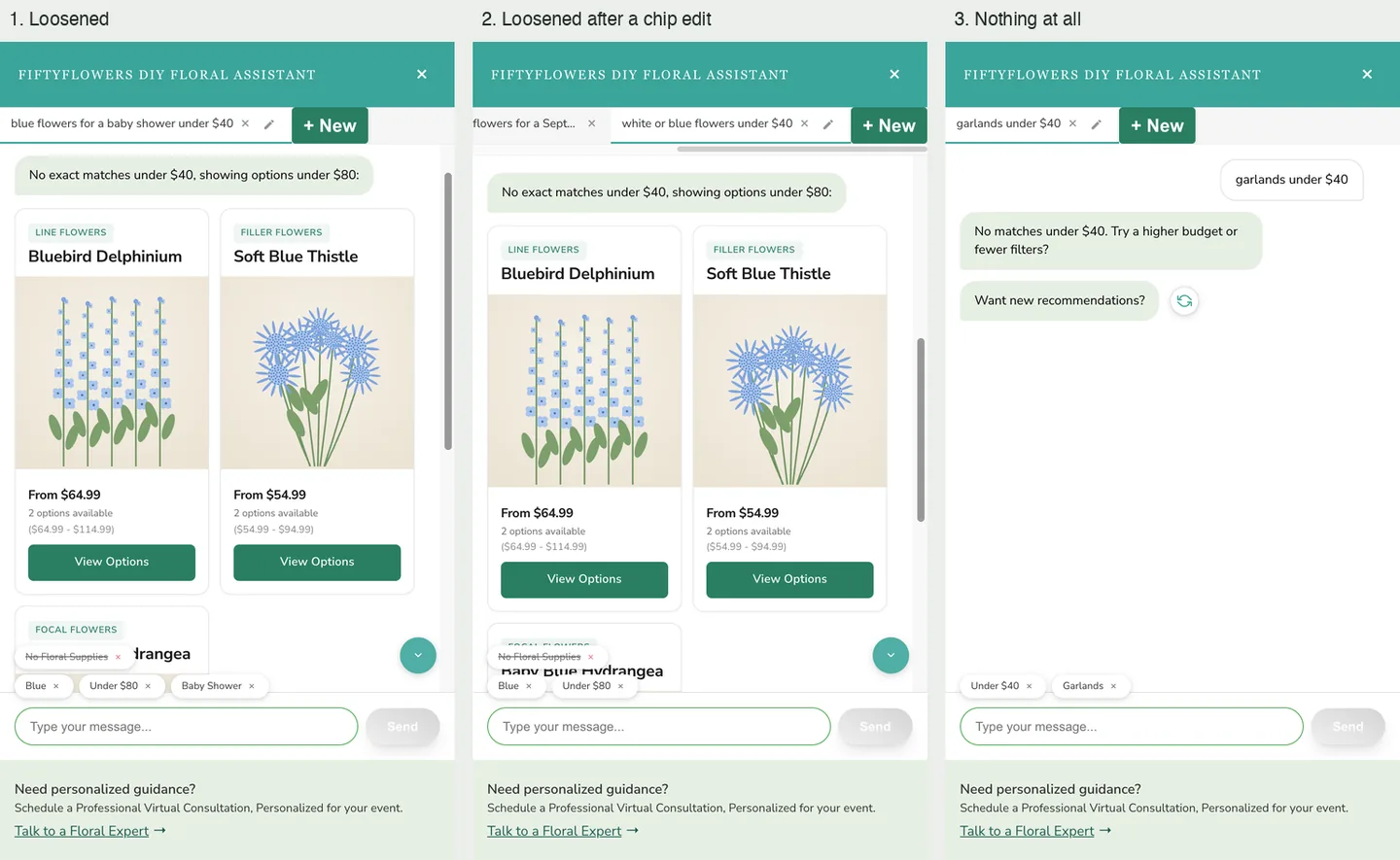
When nothing matches, the search loosens one condition at a time, such as a higher budget or any of the colors instead of all, and tells the shopper what it changed.
A shopper can keep up to ten conversations: on any device when signed in, in the same browser as a guest. Each card opens the store’s product page to choose options and buy.
At a glance / simplified product view
The storefront assistant · in the store theme since January 2026
In the store theme · behind an A/B test since January 2026
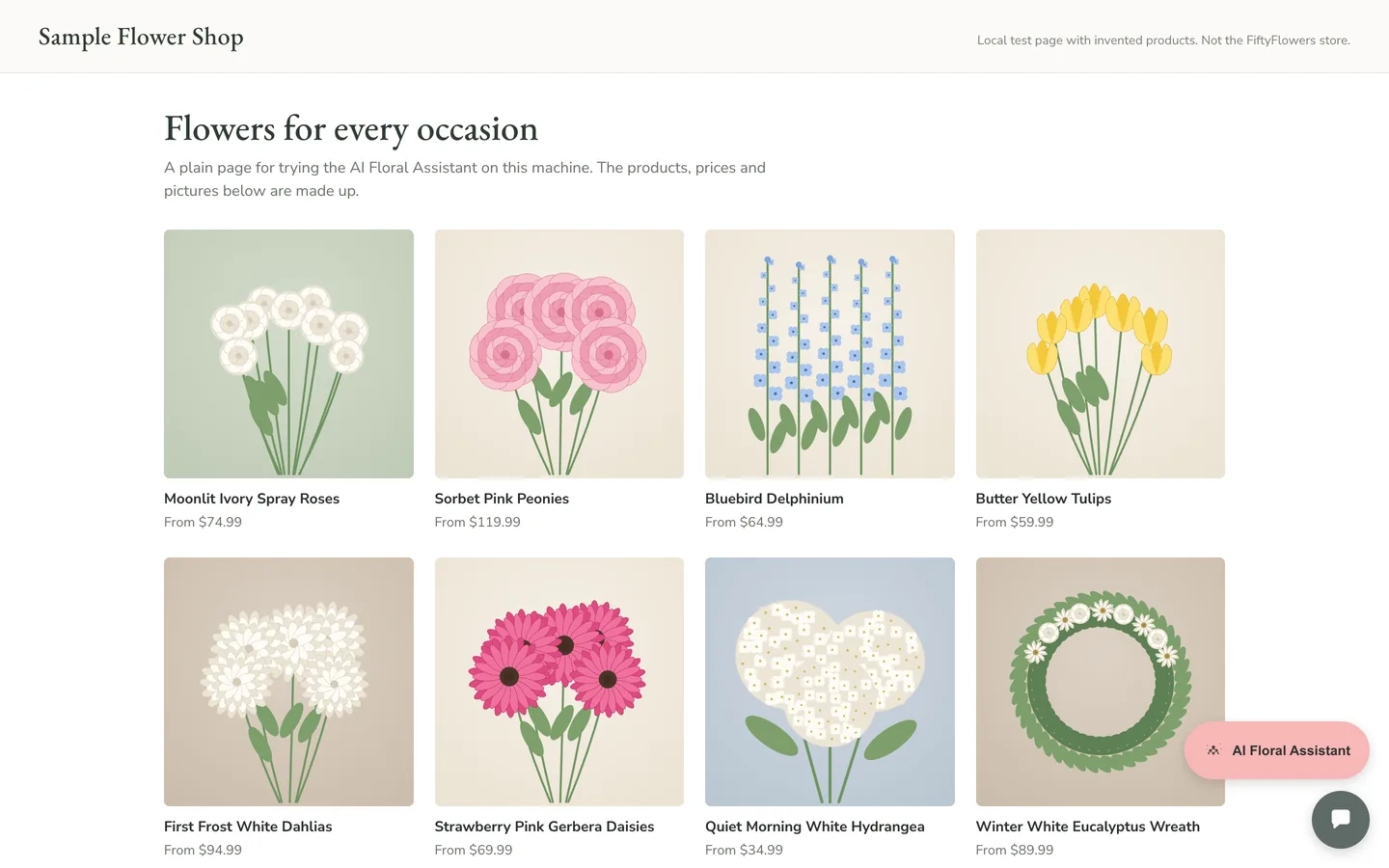
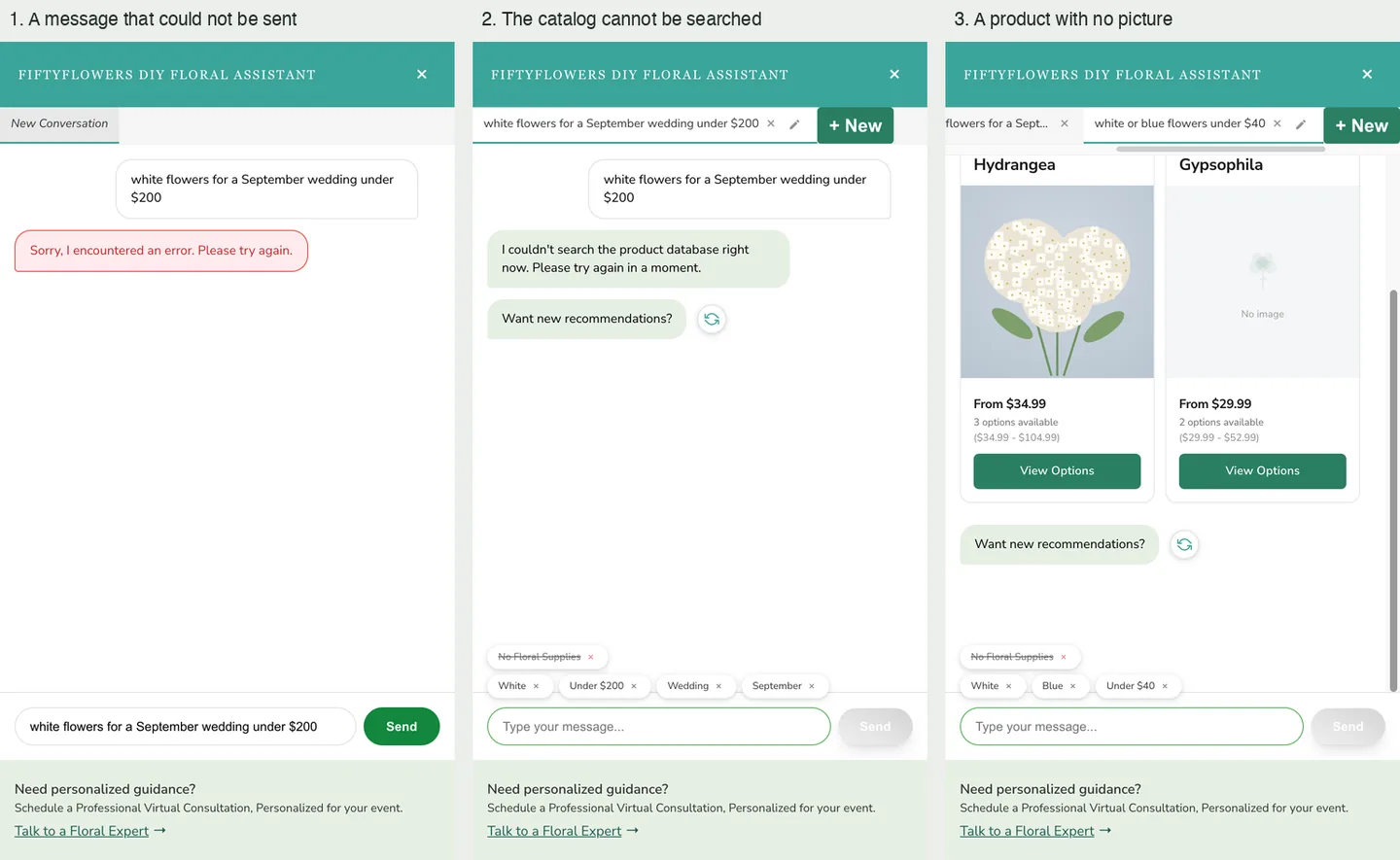
A shopper opens the panel, says what they need, and gets products from the store’s own catalog, with what the assistant understood shown as chips they can take off again. These pictures are the store theme’s own code and the assistant’s own search code running on my machine against an invented catalog. The AI step was not called: where a conversation starts from a typed request, the reading of that request was typed in by hand, and everything after it is the real code.
The prototype · August to November 2025
Prototype · ran on a developer’s machine, never shown to shoppers
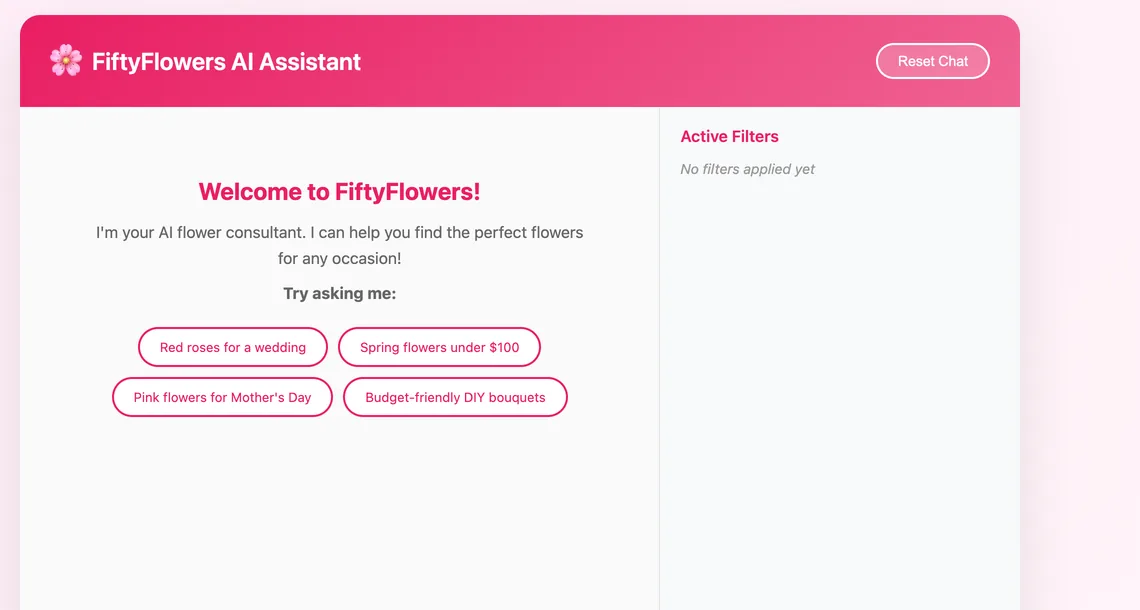
Before the storefront panel there was a chat page that read a request into filters, remembered them in a side panel and answered with numbered products. Its filter vocabulary carried into the storefront assistant. These pictures are the prototype’s own page running locally with an invented catalog, and the readings were typed in by hand.
Engineering choices
The model only turns words into filters. The search and the reply sentence are code, so every answer can be explained from its filters.
Each call sends the current filters and asks for the full updated set, so follow-ups like “also pink” or “make it red instead” need no merge logic.
The prototype’s 42 test requests ran against the catalog before the move to AWS. No usage or cost figures are claimed; none have been measured yet.
Where it stands
In the store theme since January 2026, hidden unless the company’s A/B test shows it. Next: record who the test shows it to, check card prices against product pages, and measure usage and cost.
Same company
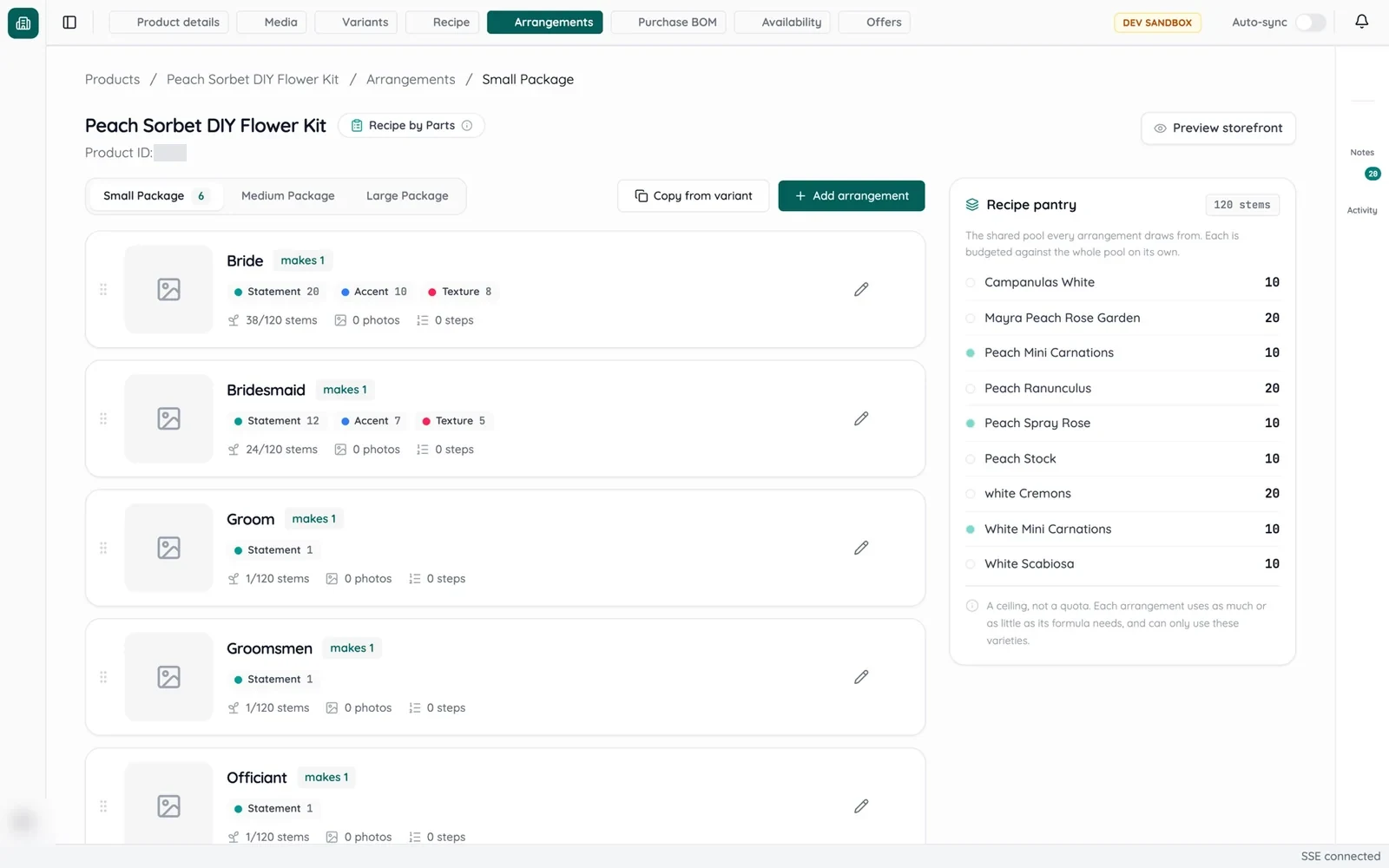 DIY kit data migrationDelivered on a test copy of the store
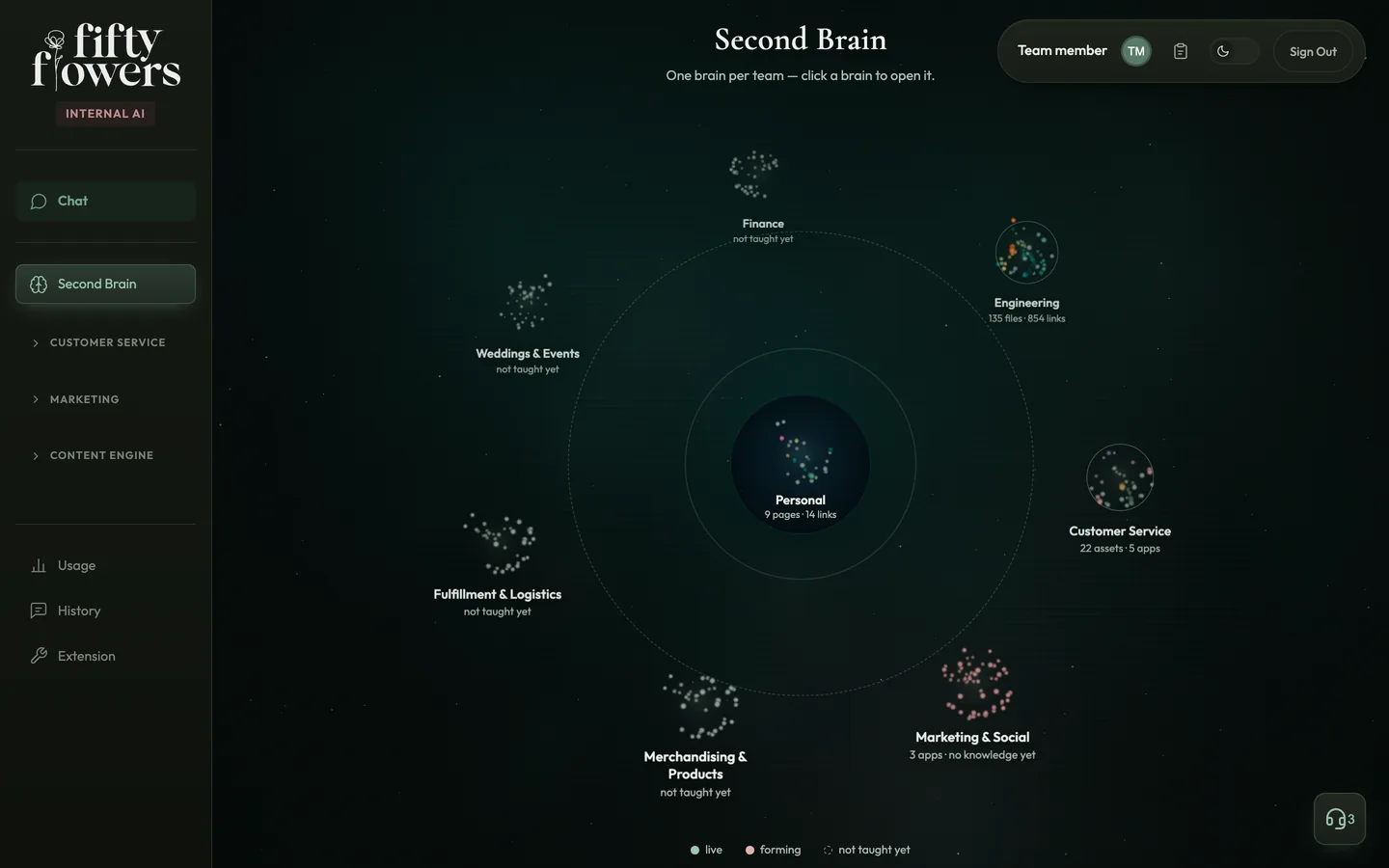 Company Second BrainMVP · live since July 2026, two of seven team brains filled
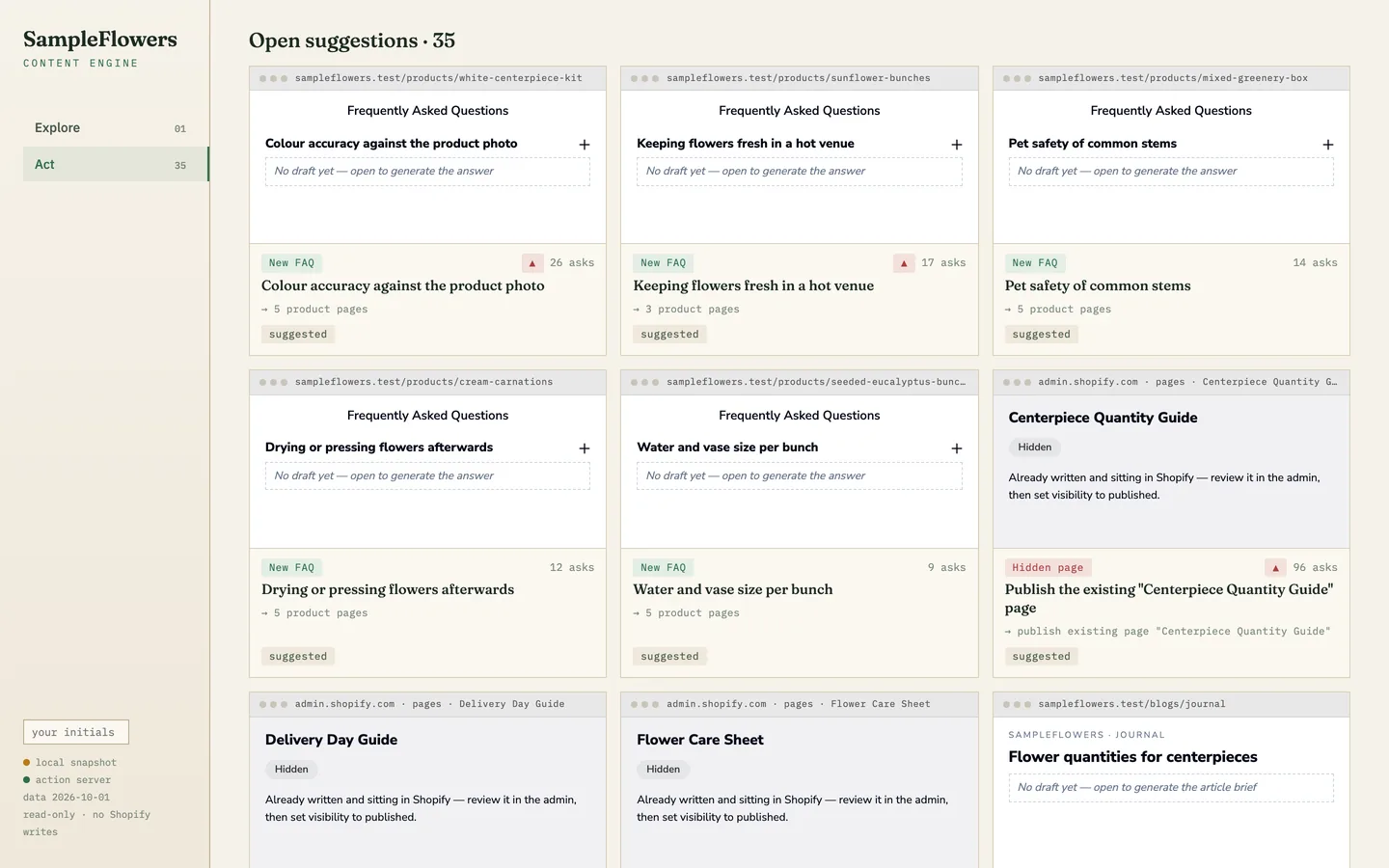 Content EngineIn the company AI workspace since June 2026 · nothing published through it yet
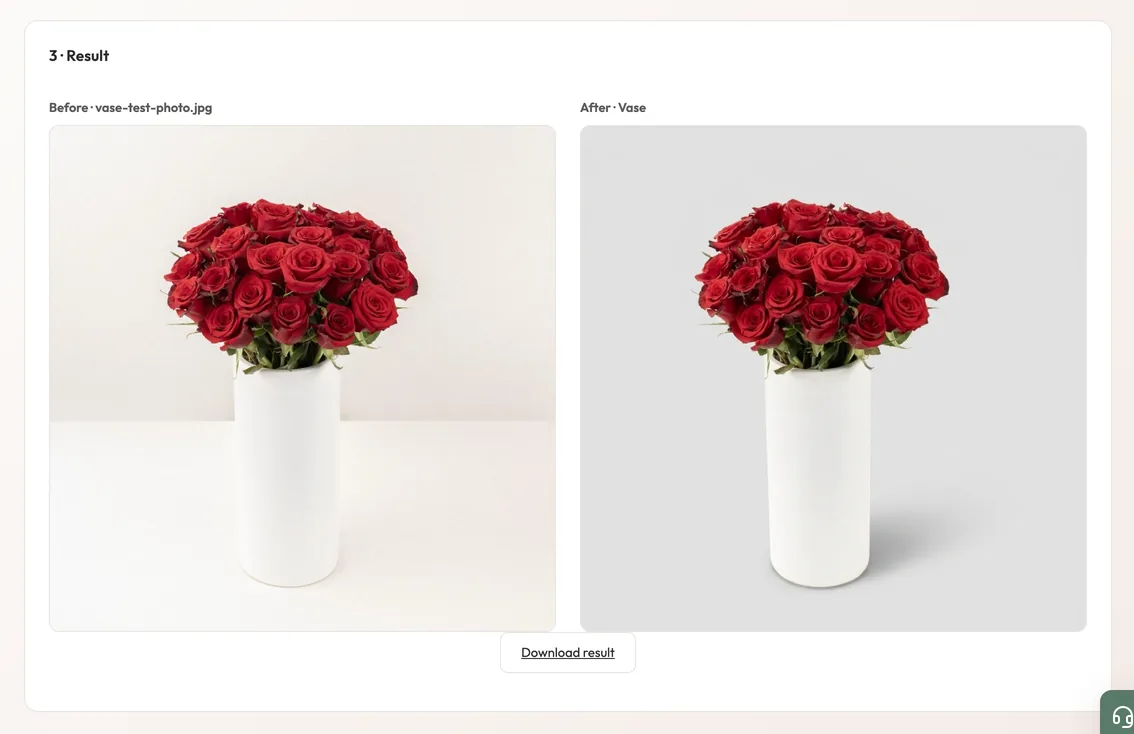 Image StudioIn production · released August 2026
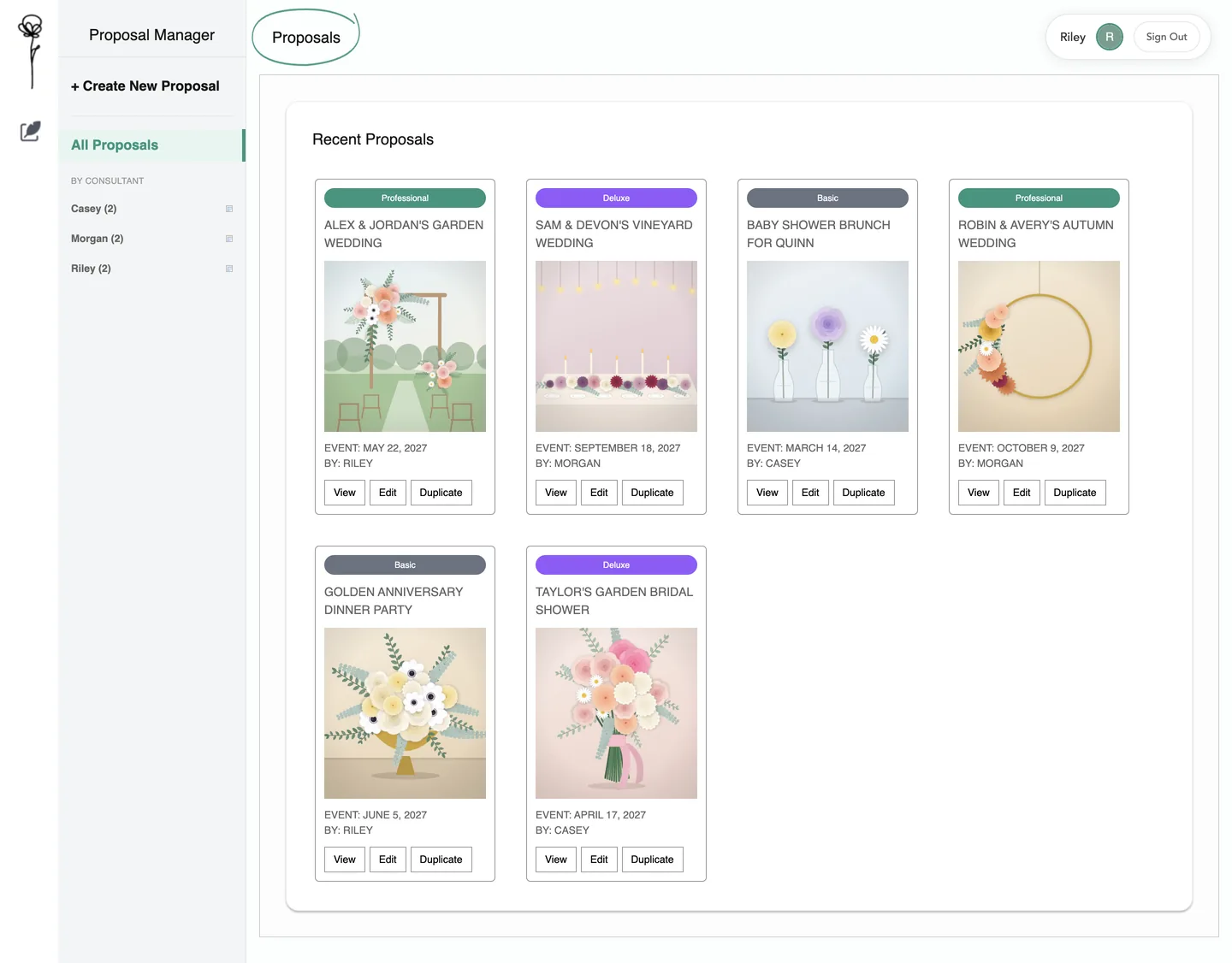 Proposal ManagerBuilt from the team’s wireframes · not launched
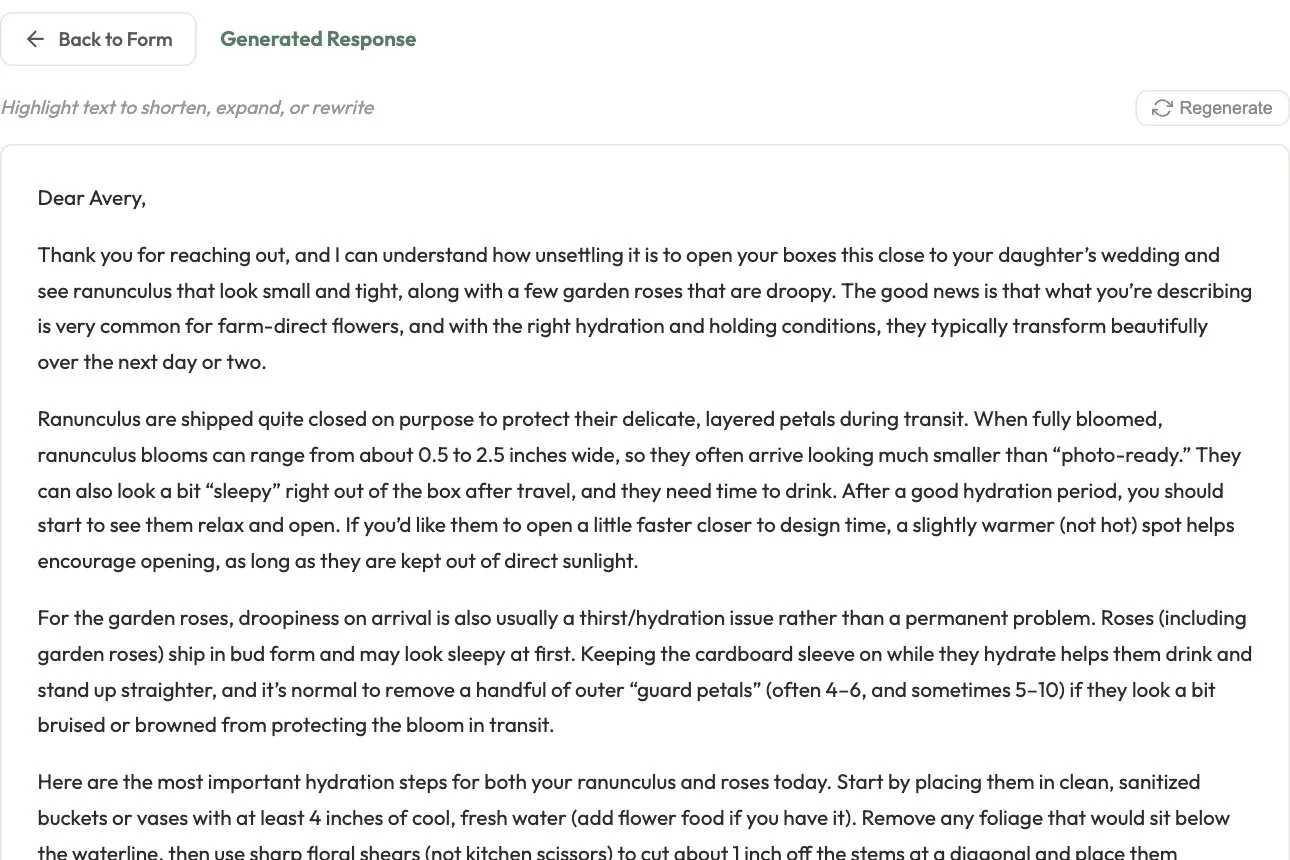 Customer service AIIn production · since January 2026
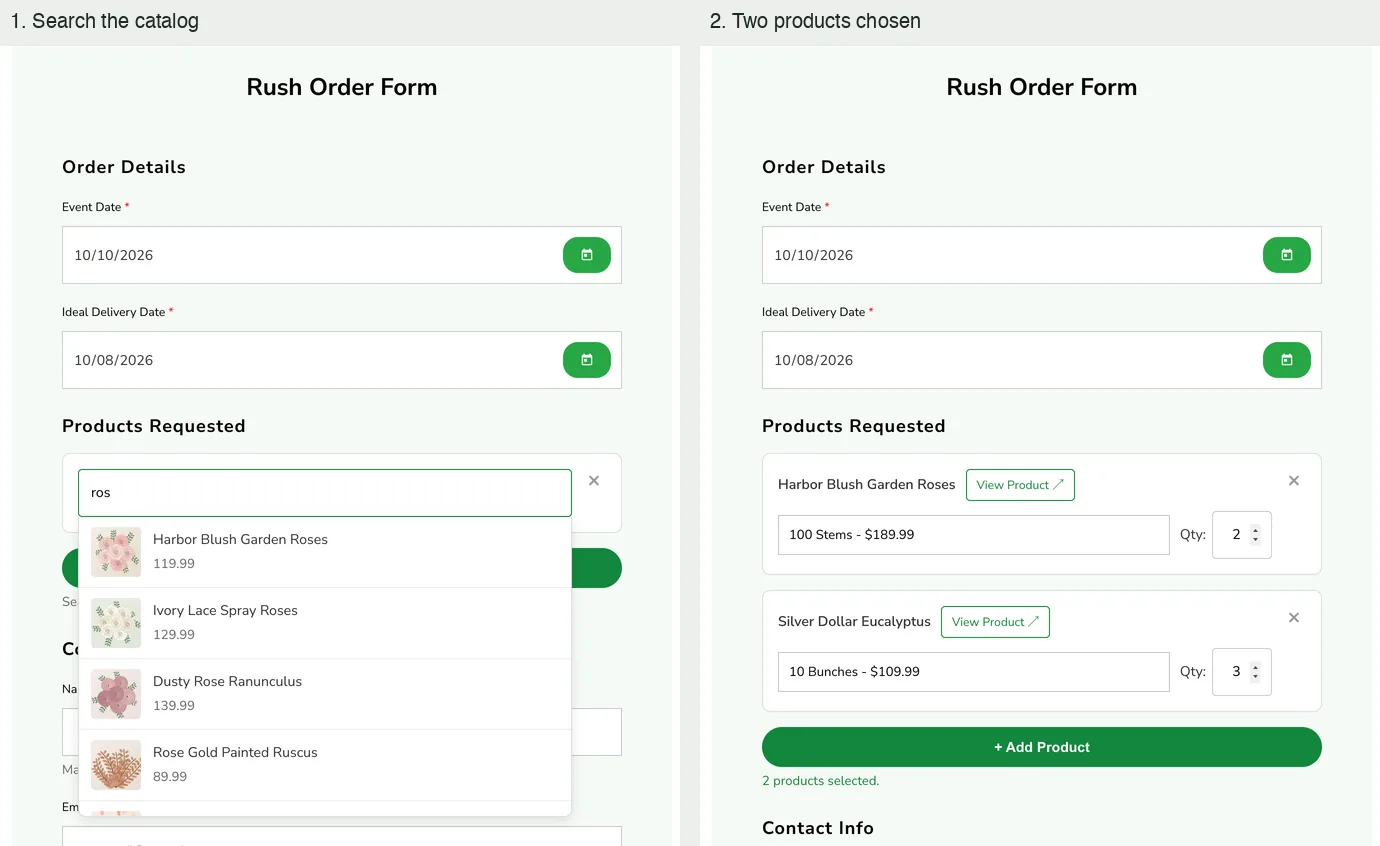 Storefront requestsRush form live · contest processing run on 2025 entries